
Uganda’s Election: Navigating Internet Access, Military Surveillance, Media Censorship, and the State of Civil Society
Uganda’s Election: Navigating Internet Access, Military Surveillance, Media Censorship, and the State of Civil Society
By Patricia Nakayima
By 6:00 pm EAT on Tuesday 13th Jan 2026, notifications stopped, updates froze, and ringtones went silent, except for direct calls.
It was then that I realised the internet blackout we experienced during the three previous presidential elections was happening again. My internet service provider, Airtel, froze my data bundles after complying with a directive from the regulator, the Uganda Communications Commission (UCC).
A statement issued by the UCC said the internet blackout was intended to protect national security during elections, prevent incitement to violence, and curb misinformation and disinformation.
For me as a journalist, this blackout was more than just losing internet access. It meant being denied the right to access information at a critical moment in Uganda’s democratic process. It meant denying the public the right to know—especially those whose only source of information is the internet. Finally, it meant freezing my communication channels, a vital tool during elections.
I was not the only one affected. Resty Nabulya, a mobile money operator in Mengo, cannot earn a living as long as the internet remains off, despite an increasing number of customers seeking financial transactions.
The situation is similar for Patrick Sserubiri, who works in the transport sector through Faras. Without internet access, Sserubiri is jobless, as customers are unable to order his services.
There are countless other businesses and individuals whose work has been heavily disrupted by the internet blackout. It remains unclear when access will be restored, but during previous elections, the country remained offline for at least three days.
By the morning of 14 January, a workmate shared a Virtual Private Network (VPN) app with me via Bluetooth. I installed it, and when I reconnected, I regained limited access to the internet. It felt like a drop of water on a hot, sunny day—not enough to stay hydrated, but enough to wet the mouth. I was able to access updates from different parts of the country and see how the world outside Uganda was responding to the election.
At that point, it became clear that many Ugandans were accessing the internet through the AM Tunnel Lite VPN, just like me. Other VPN apps were also widely used, while some people changed their internet protocol addresses through phone settings to create virtual networks.
Political leaders, activists, and political enthusiasts encouraged those online to share methods for bypassing the shutdown.
“All those in Uganda who are able to bypass the criminal regime’s internet blockade—big up yourselves! Pass around the message. Let everyone know how to do it. They cut off the internet to hide rigging and atrocities. Record everything and share with the world,” Bobi Wine posted on his social media platforms.
Proton VPN recorded an over 8,000 percent spike in sign-ups in Uganda within one hour on Tuesday, 13 January.
By Wednesday, 14 January, David Peterson announced on his X platform that the rollout had reached 98 percent. However, five hours later, he reported that Uganda had “unplugged” itself from the internet—confirming that VPNs used by Ugandans to regain access had been blocked.
As Ugandans scrambled for VPNs, security surveillance also intensified.
Military and police helicopters hovered overhead, targeting congested areas such as Bwaise, Makerere Kavule, Nakulabye, and downtown Kampala slums like Katwe.
Homes of opposition presidential candidates were not spared, as security forces expanded aerial surveillance.
On the ground, police deployed motorbike and foot patrols to monitor roads and streets. Inspector General of Police Abas Byakagaba stated that police would work with other security agencies to ensure a peaceful election process.
These measures have heightened tension among voters across the country. In Soroti, Resident District Commissioner Imran Muruga announced a ban on night movements and warned residents against opening their homes to anyone knocking. Muruga said the restrictions were based on credible intelligence that some candidates planned to engage in voter bribery by distributing items such as soap, sugar, and salt at night.
Police have also carried out several arrests over alleged incitement to violence. These operations have targeted political leaders, their supporters, activists, and civil society leaders.
The election period has further intensified media censorship and surveillance of individual journalists and media organisations. The UCC directed media houses to refrain from broadcasting, publishing, or sharing content deemed likely to destabilise national security. This includes coverage of exchanges between security forces and communities or any form of violence.
Two journalism advocacy organisations, the African Centre for Media Excellence and the Human Rights Network for Journalists Uganda, are among five rights groups ordered to suspend operations while facing investigations for alleged activities prejudicial to national security.
Twenty-one million registered voters are expected to cast their ballots on Thursday, 15 January 2026. Of these, 48% are male and 52 %female. The last election in 2021 recorded a low voter turnout of 59% attributed to violent security operations, arrests, and an internet blackout.
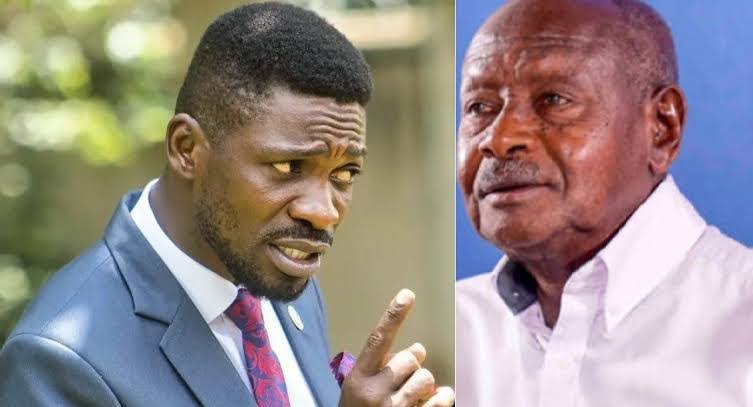
Ugandans will choose among eight male presidential candidates. Incumbent President Yoweri Kaguta Museveni faces strong opposition from second-time contender Robert Kyagulanyi Ssentamu, popularly known as Bobi Wine.
Since its independence in 1962, Uganda has never experienced a peaceful transfer of power and those below the age 40 years have also never seen another president other than Museveni.

Leave a Reply